Need help? Reach us at 

 +1 (855) 418-2323
Need help? Reach us at
+1 (855) 418-2323

 File Converters TIFF and PDF apps Forensic Freeware
1) Upload OPUS file to convert
Drop files here, or Click to select
2) Set converting OPUS to MP3 options
3) Get converted file
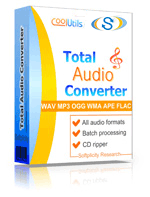
 Total Audio Converter
 Total Audio Converter supports WAV, MP3, OGG, WMA, APE, FLAC, MP4, AAC, MPC and many other rare image file types files (complete list).Rip CDs to WAV, FLAC, OGG, MP3, AAC, WMA, MPC, APE and other formats with Total Audio Converter!No tech knowledge required. Intuitive interface makes it easy for everybody to be the master of audio conversions. If you do not know what bit rate or frequency to choose the wizard of the program will automatically set the most appropriate.What to combine tracks into one audio file? Total Audio Converter can do that too!Convert MP3, WAV, AAC and many other files in seconds via our foolproof interface with lots of hints for beginners.CNet editor's review: TAC is reasonably attractive and plenty powerful to justify its $20 price.Total Audio Converter converts a lot of rare audio file types like NIST, AU, TTA, MOD, MIDI, XM, PAF, SPX audios.Total Audio Converter can split FLAC and APE files by CUE (split CUE-based FLAC, split CUE-based APE).Price. No hidden costs! Our pricing is clear and concise. Once paid you get all upgrades free for the first year. Tech support is also free to registered users (sure we will answer all your questions even if you are using trial version of Total Audio Converter).Total Audio Converter can get audio tracks from YouTube videos - just paste the url.Total Audio Converter can be run via command line (get the ready-to-use command line from GUI settings).Softonic Editor: Total Audio Converter is an easy-to-use tool conversion tool with support for a bunch of formats and ability to rip audio CDs.
💾 Upload Your File: Go to the site, click on «Upload File,» and select your OPUS file.
✍️ Set Conversion Options: Choose MP3 as the output format and adjust any additional options if needed.
Convert and Download: Click 👉«Download Converted File»👈 to get your MP3 file.




| File extension | .OPUS |
| Category | Audio File |
| Description | OPUS is one of the most versatile audio codecs designed for high-speed online media data transmission. Having scrutinized MP3, which is still the most popular audio format, specialists from Mozilla Corporation and Skype Technologies S. A. joined efforts to produce an ultimate audio codec, which would inherit the advantages of MP3 yet use a compression scheme that would help files retain original sound quality. The biggest pluses of OPUS are low coding delay, multichannel sound and high compression levels. OPUS files combine SILK codec (Skype Technologies) and CELT codec (Mozilla Corporation). |
| Associated programs | VLC media player FFMpeg |
| Developed by | Xiph.Org Foundation |
| MIME type | audio/opus audio/ogg |
| Useful links | More detailed information on OPUS files |
| Conversion type | OPUS to MP3 |
| File extension | .MP3 |
| Category | Audio File |
| Description | MP3 is the most popular audio file type based on MPEG-1 Layer III compression. Its lossy algorithm was developed in 1991. MP3 codes the sound almost with the same quality, as CD (16-bit stereo), providing compression in size 1 to 10 from the original WAF or AIFF tracks. The quality of MP3 seriously depends on the bitrate. It can be 128 - 256 kbps. Higher bitrates are also supported, but they seriously increase the file size. It is supported by all modern hard- and software players. |
| Associated programs | RealOne WinAmp Windows Media Player iTunes |
| Developed by | Fraunhofer Institute |
| MIME type | audio/mpeg audio/MPA audio/mpa-robust |
| Useful links | More detailed information on MP3 files |
Quick answer: An .opus file is the codec WhatsApp, Telegram, Discord and Signal use for voice notes, and most players will not touch it. Upload the file to the CoolUtils online OPUS to MP3 converter, select MP3 as the output format, click Convert and download an ID3-tagged MP3 that plays on any phone, car stereo or audio editor. Free, no signup.
An OPUS file is audio in the Opus codec — the low-bitrate format WhatsApp, Telegram, Discord, and Signal use for voice messages, which most media players and audio editors cannot open. This online converter decodes the Opus stream and re-encodes it as MP3, the universal format that plays on every phone, car stereo, player, and DAW. It is instant, free, and works on files up to 50 MB with nothing to install. Upload your .opus file and download the MP3 in seconds.
Messaging apps including WhatsApp, Telegram, Discord, and Signal record and store voice messages using the Opus codec because it achieves excellent speech quality at very low data consumption — typically 12 to 32 kbps. The resulting .opus files are efficient, but they do not play in most media players, audio editors, or on devices without Opus decoder support. Converting OPUS to MP3 solves the compatibility problem instantly: MP3 has been the universal audio standard since the late 1990s and plays on every device, car stereo, portable player, and editing application ever made. Upload your .opus file, choose a bitrate, and download an MP3 that works everywhere.
Opus is an open audio codec defined by IETF RFC 6716 (2012). It combines the Silk codec (optimized for speech at low bitrates) with the CELT codec (optimized for music at higher bitrates) in a single adaptive format. Opus operates at variable bitrates from 6 to 510 kbps and is the default codec for voice communications in WebRTC, making it the backbone of browser-based calling and all major messaging app voice features.
| Property | OPUS | MP3 |
|---|---|---|
| Standard / codec | IETF RFC 6716 (2012) — Silk + CELT | ISO/IEC 11172-3 (1993) — MPEG-1 Layer III |
| Bitrate range | 6–510 kbps (variable) | 32–320 kbps |
| Quality at low bitrate | Excellent — speech intelligible at 12 kbps | Acceptable — noticeable artifacts below 96 kbps |
| Compression type | Lossy (adaptive psychoacoustic model) | Lossy (DCT-based) |
| Device compatibility | VLC, Firefox, WebRTC apps | Universal — every device since the 1990s |
| Audio editor support | Limited — most editors require conversion | Native in Audacity, GarageBand, all DAWs |
| Primary use case | Real-time voice messaging and WebRTC calls | Music, podcasts, general audio distribution |
The converter decodes the Opus bitstream by reversing the CELT or Silk encoding to reconstruct uncompressed PCM audio samples. This decoded PCM data is then passed through an MP3 encoder (LAME or equivalent) at your chosen bitrate. Because both Opus and MP3 are lossy formats, this is a transcode — two compression steps are applied to the same audio. At 192 kbps MP3 output, the added quality loss from the second compression step is inaudible in normal listening conditions. The converter delivers a standard ID3-tagged MP3 file ready for any player or editor.
Page updated